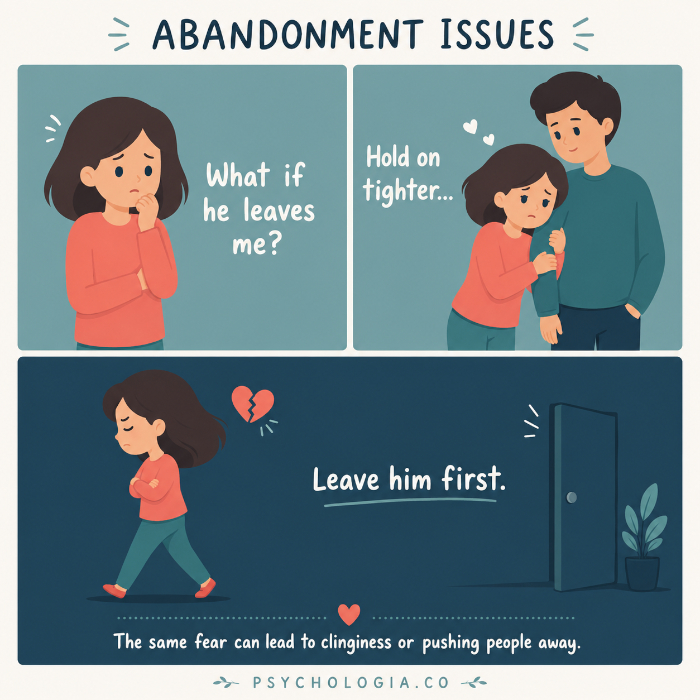
Fear of abandonment can be very painful, but it doesn’t necessarily mean that someone was literally abandoned by their parents as a child. For some people, the fear may be connected with experiences such as:
- growing up with neglectful or emotionally unavailable parents,
- losing someone they loved,
- going through a painful separation,
- experiencing intense loneliness after losing an important friendship,
- being rejected by someone they loved.
Of course, not everyone who goes through these experiences develops a fear of abandonment. People react to loss, rejection, and separation in very different ways.
What Can Fear of Abandonment Look Like?
There isn’t one particular way it shows up. Some people become very anxious when someone they care about seems distant. Others protect themselves by avoiding closeness in the first place.
Some patterns that may be connected with fear of abandonment include:
- intense jealousy or clingy behavior,
- needing a lot of reassurance that someone isn’t going to leave,
- becoming very anxious when a partner seems distant or unavailable,
- pretending not to care when you actually care a great deal,
- rejecting or pushing someone away before they have a chance to reject you,
- avoiding close relationships because getting attached feels too risky,
- having difficulty trusting that people will stay,
- staying in an unhealthy relationship because being alone feels even worse,
- feeling insecure or easy to replace.
So fear of abandonment doesn’t always look like clinging to someone. Sometimes it looks like the opposite: keeping your distance, acting as though you don’t care, or leaving first.
Fear of Abandonment and BPD
Fear of abandonment can also be associated with Borderline Personality Disorder (BPD). Intense efforts to avoid real or perceived abandonment can be one feature of BPD, along with other symptoms. You can read more about BPD here.
However, having abandonment fears does not mean that someone has BPD. “Abandonment issues” itself is not a separate mental health diagnosis, either.
It’s also easy to read a list like this and start diagnosing your partner or your ex. Try not to do that. Jealousy, insecurity, relationship avoidance, or a need for reassurance can happen for many reasons. A few behaviors don’t tell you what is going on inside another person.
If fear of being left or rejected is causing a lot of distress or repeatedly creating problems in your relationships, talking it through with a therapist or counselor may help you understand the pattern and where it comes from.
Abandonment Issues Quiz: Do You Struggle With Trust and Attachment?